The Tax Questions Worth Asking Your CPA
With filing time on the horizon for tax year 2025, here are several questions to ask your tax professional!
For many people, tax season comes and goes without much reflection.
They file their return.
They pay what’s owed on TurboTax or receive a refund.
And then they move on.
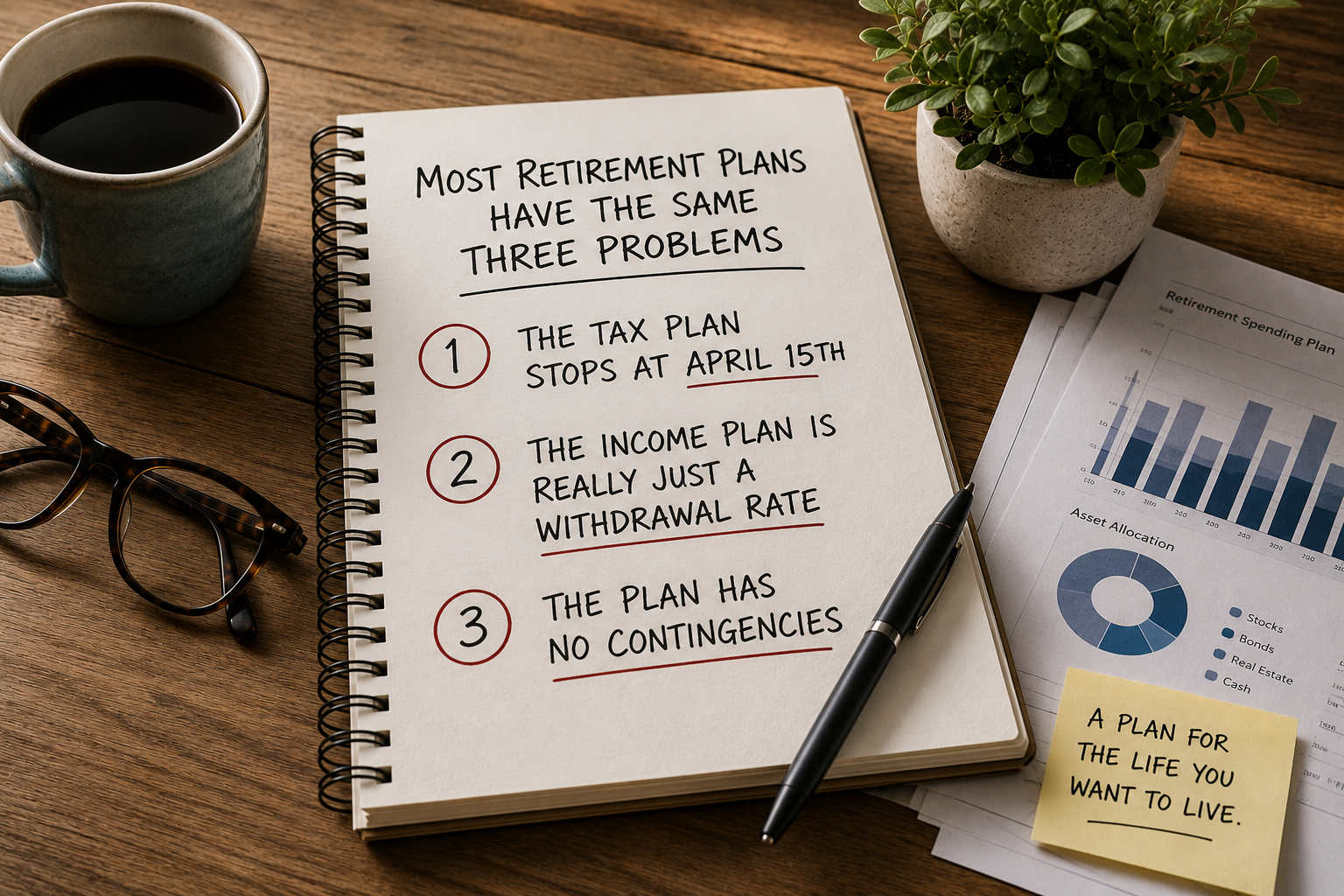
But a completed tax return doesn’t automatically mean you have a good tax strategy or any tax strategy at all, for that matter. It simply means you complied with the rules for last year.
Tax planning, on the other hand, is a forward-looking approach. It asks how today’s decisions affect future taxes, flexibility, and outcomes. And that’s where many households miss opportunities—not because anyone made a mistake, but because the right questions were never asked.
As we move through tax year 2025, here are the key questions to consider.
1) How Am I Actually Being Taxed?
Most people have a misunderstanding of the tax they pay. Few know what their effective tax rate is, and far fewer understand their marginal tax rate, or how close they are to the next bracket.
This matters because future decisions (bonuses, investment sales, Roth conversions, retirement income) are all taxed at the margin. It’s also important to consider whether today’s tax rate is likely lower or higher than what you’ll face later.
The real question isn’t whether you paid “too much” tax last year. It’s whether your current strategy aligns with where your income is heading.
2) How Much Future Income Am I Quietly Accumulating?
Pre-tax retirement accounts are powerful tools, but they also represent future taxable income.
One of the most overlooked planning risks is income compression later in life, when required distributions, Social Security, and investment income stack on top of each other. What feels tax-efficient today can create surprises down the road.
This question isn’t about avoiding pre-tax savings. It’s about understanding how today’s contributions affect flexibility later.
3) Do I Have Enough Tax Flexibility Built In?
Flexibility is one of the most valuable (and underappreciated) aspects of a good plan.
Having a mix of pre-tax, Roth, and taxable assets gives you options—options to manage income, control tax brackets, and adapt when laws or circumstances change. Without that balance, future planning becomes reactive instead of intentional.
Tax year 2025 is a good time to step back and ask whether your account mix supports flexibility or limits it.
4) What Secondary Taxes or Thresholds Am I Exposed To?
Income taxes are only part of the picture.
Medicare premiums, Social Security taxation, capital gain thresholds, and other phaseouts often surprise people because they aren’t visible on a standard tax return. These “secondary taxes” can materially affect net income, especially as income rises or shifts sources.
Understanding where these thresholds sit—and how close you are to them—can be just as important as knowing your tax bracket.
5) Are My Charitable Giving Decisions Aligned With My Tax Situation?
Charitable giving is one of the few areas where tax planning and personal values naturally intersect.
But many people give generously without considering how they give. Cash, appreciated assets, qualified charitable distributions, and bunching strategies can all dramatically change the tax impact of the same level of generosity.
The right question isn’t whether you’re giving enough. It’s whether you’re giving efficiently, in a way that supports both your goals and your broader plan.
6) Who Is Responsible for Coordinating My Tax Strategy and Financial Plan?
This is often the most important—and least asked—question.
CPAs excel at tax compliance. Financial planners focus on long-term decision-making. When those roles operate independently, gaps can form. When they coordinate, planning becomes far more effective.
Clarity around who is watching the big picture helps ensure that decisions made for one purpose don’t quietly undermine another.
7) What Decisions in 2025 Will Matter Most Five Years From Now?
Not every tax decision deserves equal attention.
Some choices—income timing, account selection, asset sales—can have ripple effects that last for years. Others matter only for the current filing season.
A good planning conversation helps separate the urgent from the important, so energy is spent where it actually makes a difference.
Parting Words
Most tax surprises aren’t caused by mistakes; they’re caused by years of missed planning opportunities.
Tax year 2025 is a good reminder that filing a return is the end of one process, but planning is an ongoing one. Asking better questions now can make future decisions clearer, calmer, and more intentional.
Have any questions about what you’ve read? Let’s talk about them!
Read My Other Work!